Automotive Technician Salary in 2026: How Much Do Auto Techs Really Make?
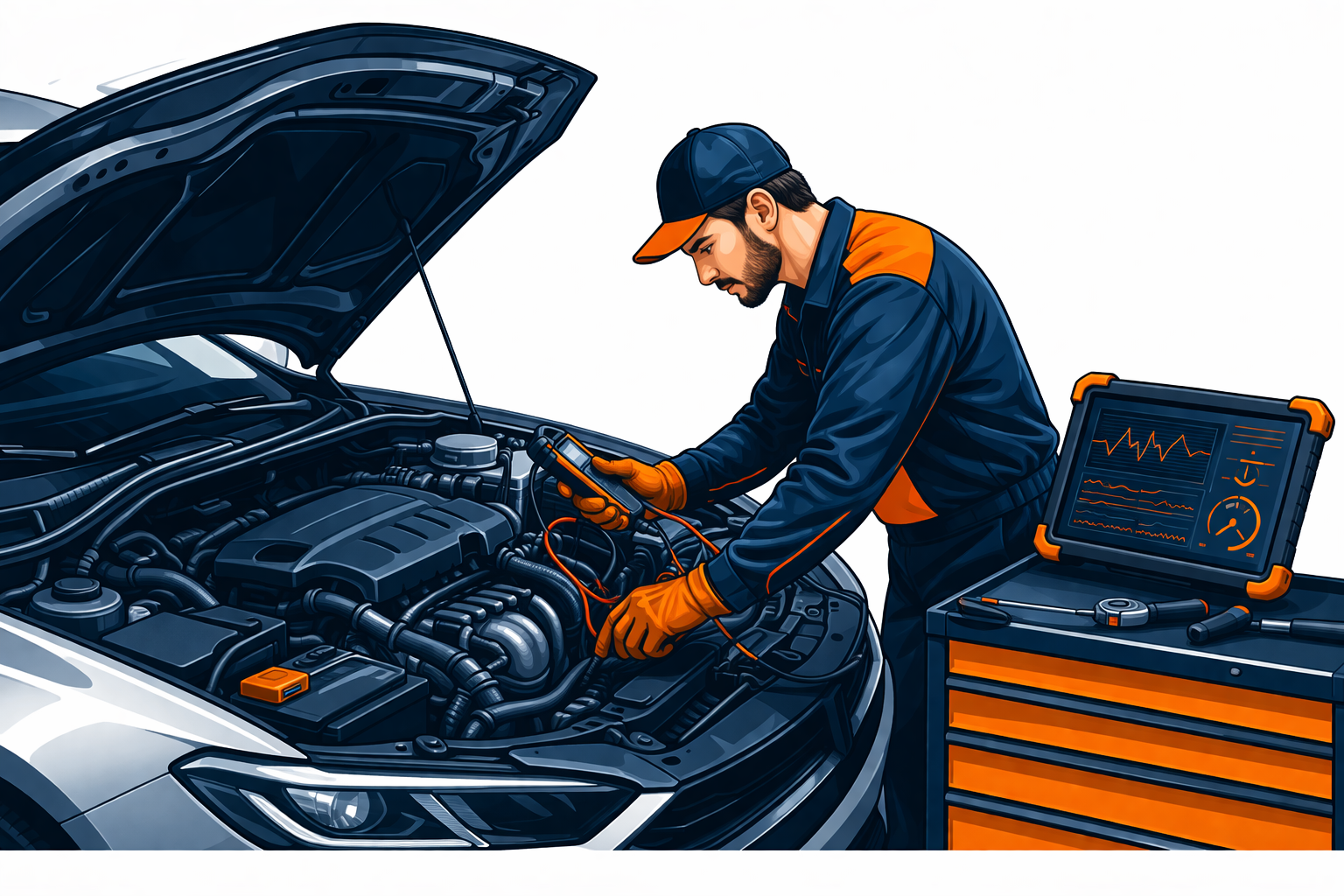
If you love cars and like solving problems, becoming an automotive technician might be the right career for you. But how much do auto techs actually make?
The answer depends on where you work, what you specialize in, and how good you are. The best technicians at busy dealerships earn $80,000 to $100,000+. But the average is lower, and the pay structure is different from most jobs.
This guide breaks down real automotive technician salaries using verified data so you know exactly what to expect.
Automotive Technician Salary Overview
Here are the numbers for 2026 based on Bureau of Labor Statistics and industry data:
- Entry-level (0-2 years): $30,000 to $38,000 per year
- Mid-level (3-5 years): $40,000 to $55,000 per year
- Experienced (5-10 years): $55,000 to $70,000 per year
- Master technician (10+ years): $65,000 to $90,000+ per year
National median: approximately $47,930 per year or $23.04 per hour according to the Bureau of Labor Statistics.
But here's what the median doesn't tell you. The top 10% of automotive technicians earn $75,000+. Flat-rate technicians at high-volume dealerships who are fast, efficient, and skilled routinely earn $80,000 to $100,000+.
The pay gap between an average tech and a great tech is massive. The difference comes down to skill, speed, certifications, and the pay structure you work under.
How Automotive Technician Pay Works
This is where the auto industry is different from almost every other trade. Most technicians are not paid a straight hourly wage. Understanding pay structures is critical.
Flat Rate Pay
How it works: You're paid a set number of hours for each job - regardless of how long it actually takes you. If a brake job pays 2.0 hours and you finish it in 1.5 hours, you still get paid for 2.0 hours. But if it takes you 3 hours, you still only get paid for 2.0.
Flat rate is how top techs make big money. A fast, skilled technician can "beat the clock" and earn 50-60+ hours of pay in a 40-hour week. At $30/hour flat rate, that's $1,500 to $1,800 per week - or $78,000 to $93,600 per year.
The downside: When the shop is slow and there aren't enough cars to work on, you might only get 25-30 hours of pay in a 40-hour week. Your income fluctuates with the shop's car count.
Flat rate is most common at dealerships. It rewards speed and efficiency. The best flat-rate techs are master diagnosticians who can find problems fast and fix them right the first time.
Hourly Pay
How it works: You're paid a set hourly rate regardless of how many jobs you complete. Steady, predictable income.
Typical hourly rates:
- Entry-level: $15 to $20 per hour
- Mid-level: $20 to $28 per hour
- Experienced: $28 to $35 per hour
- Master tech: $30 to $42 per hour
Hourly pay is more common at independent shops, quick lube chains, and some fleet maintenance operations. The income is more predictable but the ceiling is lower than flat rate.
Salary Pay
Some shops - especially fleet operations, government jobs, and some dealerships - pay technicians a straight salary. This offers the most stability but typically the lowest earning potential for highly skilled techs.
Hybrid Pay
Some shops offer a base hourly rate plus a production bonus. You earn a guaranteed minimum but can earn more if you produce above a certain threshold. This combines the stability of hourly with the upside of flat rate.
Dealership vs Independent Shop
Where you work makes a huge difference in your pay.
Dealership Technician
Average pay: $45,000 to $75,000 Top earners: $80,000 to $100,000+
Pros:
- Higher pay ceiling (especially flat rate)
- Manufacturer training (Ford, Toyota, GM, etc.)
- Better equipment and tooling
- Benefits packages (health insurance, 401k, paid training)
- Steady car count at busy dealers
- Clear career advancement path
Cons:
- Pressure to produce (flat rate stress)
- Must invest in expensive tools ($20,000 to $60,000+ over your career)
- Dealing with warranty work (often pays less than customer pay)
- Weekend work is common
Independent Shop Technician
Average pay: $35,000 to $55,000 Top earners: $60,000 to $75,000
Pros:
- More variety of work (all makes and models)
- Often more relaxed atmosphere
- Less corporate pressure
- Some shops provide tools
Cons:
- Lower pay ceiling
- Fewer benefits (depends on the shop)
- Less access to manufacturer training
- Older or less specialized equipment
Quick Lube / Chain Shops
Average pay: $28,000 to $40,000 Top earners: $45,000
These are entry-level positions - oil changes, tire rotations, basic maintenance. Good for getting started but not a long-term career for serious technicians. Move to a dealership or quality independent shop as soon as you have basic skills.
Salary by Specialty
Specializing in a specific area can significantly boost your pay.
General Automotive Technician
$40,000 to $60,000 per year
The bread and butter - brakes, suspension, maintenance, basic engine work. Most techs fall into this category.
Diagnostic Specialist
$60,000 to $85,000 per year
Techs who excel at diagnosing complex problems - electrical faults, drivability issues, check engine lights - are worth their weight in gold. Diagnostic skills are the highest-value skill in the modern shop.
This is where technology matters. Modern vehicles are rolling computers. The best diagnostic techs understand electrical systems, data interpretation, and computerized engine management. APEX Tech offers a full academy covering everything from basic electrical theory to advanced diagnostic strategy - the kind of training that separates a $50,000 tech from a $90,000 tech.
Transmission Specialist
$55,000 to $80,000 per year
Fewer techs specialize in transmissions, which means higher demand and pay. Automatic and CVT transmission work requires specialized knowledge and tools.
Diesel Technician
$55,000 to $85,000 per year
Working on diesel trucks, buses, and heavy equipment. Diesel techs are in very high demand. The work is heavier but the pay reflects it.
For more on diesel careers, check out our highest paying trade jobs guide.
EV / Hybrid Technician
$55,000 to $80,000 per year (and rising fast)
Electric and hybrid vehicle repair is the fastest-growing specialty. Techs certified in high-voltage systems command premium pay because the work requires specialized training and safety protocols.
This specialty will only grow. As more EVs hit the road, the demand for qualified EV techs will explode. Getting certified now puts you ahead of the curve. The APEX Tech Nation Automotive Technician Academy covers EV and hybrid diagnostic fundamentals to help you get ahead of this shift.
Performance / Custom Shop
$45,000 to $75,000 per year
Working on performance modifications, custom builds, and racing vehicles. The pay varies widely but the work is some of the most enjoyable in the industry.
ASE Certifications: The Key to Higher Pay
ASE (Automotive Service Excellence) certifications are the industry standard for proving your competency. More certifications = higher pay.
How ASE Certifications Work
There are over 40 ASE certification tests across different categories. The most important for automotive technicians:
- A1 - Engine Repair
- A2 - Automatic Transmission
- A3 - Manual Drivetrain
- A4 - Suspension and Steering
- A5 - Brakes
- A6 - Electrical/Electronic Systems
- A7 - Heating and Air Conditioning
- A8 - Engine Performance
- A9 - Light Vehicle Diesel Engines
- L1 - Advanced Engine Performance (the hardest and most valuable)
ASE Master Technician
Earn certifications in A1 through A8 and you become an ASE Master Technician. This is the gold standard in the industry.
Pay impact: ASE Master Technicians typically earn $5 to $10 more per hour than non-certified techs. That's $10,000 to $20,000 more per year.
Cost of ASE Certification
- Registration fee: $40
- Each test: $47
- Total for all 8 A-series tests: About $416
- Study guides: $20 to $50 each
Many employers pay for ASE testing. Ask your employer before paying out of pocket.
How to Prepare
- Use ASE practice tests available online
- Study the ASE study guides for each area
- Get hands-on experience in each area before testing
- Train with APEX Tech Academy to sharpen your diagnostic and electrical skills - especially for the A6 (Electrical) and A8 (Engine Performance) tests. The academy covers the theory and real-world diagnostic strategy that ASE exams test.
How to Become an Automotive Technician
Path 1: Trade School / Technical College
Length: 6 months to 2 years Cost: $5,000 to $20,000
Technical programs teach you the fundamentals - engine repair, brakes, electrical, diagnostics. Many programs include ASE test preparation. Some partner with manufacturers (Ford ASSET, Toyota T-TEN, GM ASEP) for brand-specific training with guaranteed job placement.
Path 2: Dealership Apprenticeship
Many dealerships hire entry-level techs or apprentices with little or no experience. You start by doing basic work - oil changes, tire rotations, multi-point inspections - and learn from experienced techs.
This is how I started. 18 years as a technician, working my way from lube tech to ASE Master Technician. No college degree needed. Just show up, work hard, and never stop learning.
Path 3: Military Training
All military branches train vehicle technicians. Military automotive training transfers directly to civilian shops. Veterans with military automotive experience are highly valued by dealerships.
Path 4: Manufacturer Training Programs
Ford, Toyota, GM, Honda, and others partner with community colleges to offer manufacturer-specific training programs. These programs typically include:
- Free or reduced tuition
- Alternating between classroom and dealership work
- Guaranteed employment at a dealership after graduation
- Brand-specific certifications
These are some of the best deals in automotive training. You get paid to learn and have a job waiting when you finish.
Path 5: Self-Study with APEX Tech Academy
If you're already working in a shop and want to level up your skills without going back to school, the APEX Tech Nation Academy covers everything from basic electrical fundamentals to advanced diagnostic strategy. It's AI-powered training built by a 25-year fixed ops veteran - designed for working technicians who want to earn more by getting better at diagnosing problems. Study on your own time, at your own pace.
The Tool Investment
Every automotive technician needs their own tools. This is a significant investment that most people outside the industry don't realize.
Typical tool investment over a career:
- Entry-level starter set: $2,000 to $5,000
- Mid-career tools: $15,000 to $30,000
- Master tech tool collection: $30,000 to $60,000+
- Diagnostic scan tool: $3,000 to $10,000
This is real. Your tools are your livelihood. Most techs buy tools over time through weekly tool truck payments (Snap-on, Mac, Matco).
Some employers provide tools - especially for entry-level positions. Ask during your interview. It can save you thousands.
Pro tip: Buy quality tools for the things you use every day. Buy budget tools for things you rarely use. Don't finance a $60,000 toolbox your first year. Build your collection over time.
The Technician Shortage
Here's the reality the industry doesn't want you to know: there aren't enough technicians.
The auto industry needs approximately 100,000 new technicians per year to keep up with demand. Trade schools are graduating a fraction of that. The average age of a working technician is getting older every year.
What this means for you:
- Shops are competing for good techs - you have bargaining power
- Sign-on bonuses of $2,000 to $10,000 are becoming common
- Employers are offering better benefits and pay to attract talent
- Job security is excellent - there will always be cars to fix
The shortage is especially acute for diagnostic specialists and EV-certified technicians. If you develop these skills, you'll never have trouble finding work.
Career Advancement
An automotive tech career doesn't have to stop at the shop floor. Here's where you can go:
Shop Foreman / Lead Tech
$60,000 to $80,000
Oversee other technicians, manage workflow, handle complex diagnostics. The best techs often move into this role.
Service Advisor
$50,000 to $90,000 (with commission)
The bridge between customers and technicians. Service advisors write repair orders, explain repairs to customers, and sell additional services. Top advisors at busy dealerships earn $80,000 to $120,000+.
Service Manager
$70,000 to $120,000
Run the entire service department - staffing, budgets, customer satisfaction, profitability. This is where technical knowledge meets business management.
I spent 7 years managing high-volume dealership service departments. The skills you build as a technician - problem-solving, attention to detail, understanding vehicle systems - translate directly into management. It's a natural career progression.
Fixed Operations Director
$100,000 to $180,000+
Oversee both the service and parts departments. This is the top of the fixed ops career ladder at a dealership. Directors at large dealership groups can earn well over $150,000.
Shop Owner
$80,000 to $200,000+
Open your own repair shop. You control the work, the hours, and the income. Master technicians with business skills and a good reputation can build very profitable shops.
Technical Trainer / Instructor
$55,000 to $80,000
Teach the next generation at a trade school or for a manufacturer training program. If you love the technical side but want out of the shop, this is a great path.
Tips to Earn More as an Automotive Technician
1. Get ASE certified. Every certification you earn adds to your value. Aim for Master Technician status.
2. Specialize in diagnostics. Diagnostic skills are the most valuable skill in the modern shop. Any tech can swap parts. The tech who can find the problem fast is worth twice as much. Train like you're in a vocational training institute - sharpen your diagnostic thinking with AI-powered scenarios at APEX Tech Nation.
3. Work flat rate at a busy dealership. If you're fast and skilled, flat rate is where the money is. A busy shop with high car count is essential.
4. Learn EV and hybrid systems. This is the future. Techs certified in high-voltage systems will command premium pay.
5. Never stop training. The best techs attend every training opportunity. Manufacturer training, ASE updates, online courses, industry conferences. The technology changes every year.
6. Keep your comeback rate low. Comebacks (cars that come back because the repair wasn't done right) cost you time and money on flat rate. Do the job right the first time, every time.
7. Build your tool collection smart. Quality daily-use tools, budget for occasional-use tools. Don't let tool debt eat your paycheck.
8. Consider management. If you've been turning wrenches for 10+ years and your body is feeling it, moving into service advising or management can extend your career and increase your income.
Frequently Asked Questions
How long does it take to become an automotive technician? You can start working as a lube tech or apprentice with no formal training. A technical school program takes 6 months to 2 years. Becoming an ASE Master Technician typically takes 5 to 8 years of experience plus passing the certification exams.
Is being an automotive technician a good career? For the right person, yes. The pay can be very good ($60,000 to $100,000+ for top techs), the work is hands-on and varied, and job security is strong. But it's physically demanding, the tool investment is significant, and flat rate pay creates pressure.
Do I need a degree to be an automotive technician? No. Many successful technicians started with no formal education. However, a technical school program gives you a strong foundation and helps you advance faster.
Is the auto industry moving away from gas cars? Electric vehicles are growing but gas and hybrid vehicles will be on the road for decades. Technicians who can work on ALL types - gas, hybrid, and electric - will have the strongest careers.
How much do dealership techs make vs independent shop techs? Dealership techs typically earn 20-40% more than independent shop techs. Top dealership flat-rate techs can earn $80,000 to $100,000+. Independent shop techs typically max out around $55,000 to $75,000 unless they own the shop.
What are the biggest challenges of being an automotive technician? Physical wear and tear on your body, expensive tool investment, flat rate pressure during slow periods, and keeping up with rapidly changing vehicle technology. The techs who manage these challenges earn great livings.
How do I get better at diagnostics? Experience is the best teacher. But structured training accelerates your growth. The APEX Tech Academy offers AI-powered diagnostic training covering electrical systems, engine performance, drivability, and more - built by someone who spent 18 years on the shop floor and 7 years managing service departments.
What to Do Right Now
- If you're considering the career, visit a local dealership service department. Ask to shadow a technician for a day. Seeing the work firsthand is the best way to know if it's right for you.
- Search for automotive tech programs at your local community college or trade school. Look for manufacturer-sponsored programs (Ford ASSET, Toyota T-TEN) for the best job placement.
- If you're already a tech, work toward your ASE certifications. Start with the areas you're strongest in and build from there.
- Level up your diagnostic skills with APEX Tech Nation a modern Automotive Technical Institute for technicians - AI-powered training covering everything from basic electrical to advanced diagnostic strategy. Built by a 25-year fixed ops veteran who's been in your shoes.
- Compare this career to other options in our highest paying trade jobs guide, HVAC salary guide, and electrician apprenticeship guide.
The automotive industry needs technicians. Badly. If you're willing to learn, work hard, and invest in your skills, this career will reward you for decades. The cars keep coming. The technology keeps evolving. And the techs who stay sharp will always be in demand.
Already Working as a Tech?
APEX Tech Nation has free AI diagnostics, 400+ technical training articles, ASE practice tests, and a weekly industry report. Built by a 25-year ASE Master Tech.