HVAC Technician Salary in 2026: How Much Do They Really Make?
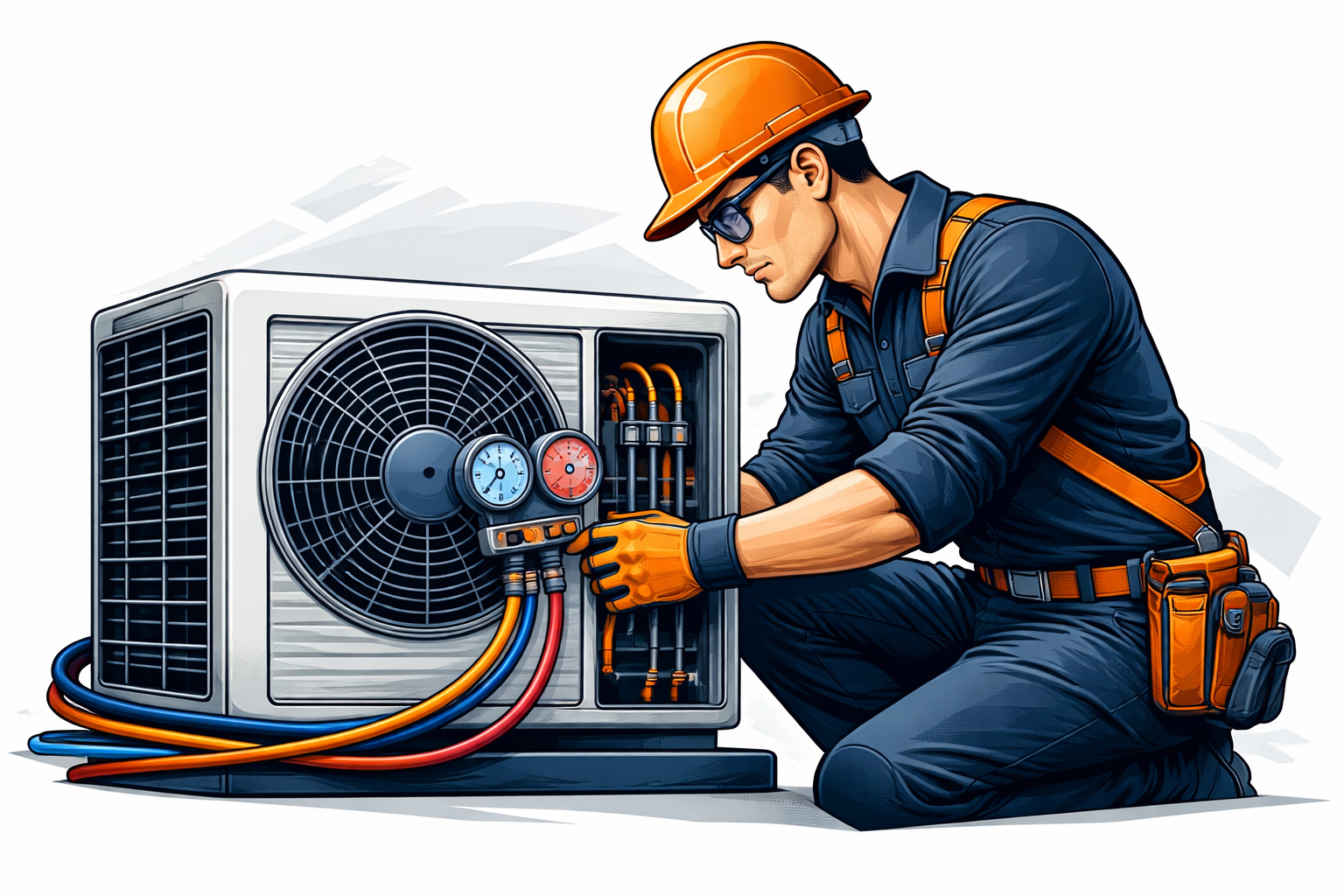
HVAC is one of the most in-demand trades in America. Every home, office, hospital, and factory needs heating and cooling. And there aren't enough technicians to keep up with demand.
So how much do HVAC technicians actually make? More than most people think.
This guide breaks down real HVAC technician salaries using verified 2026 data from the Bureau of Labor Statistics, PayScale, and industry sources.
HVAC Technician Salary Overview
Here are the verified numbers for 2026:
- Entry-level (0-2 years): $42,000 to $54,000 per year
- Intermediate (2-4 years): $55,000 to $66,000 per year
- Senior (4-7 years): $74,500 to $77,000 per year
- Supervisor / Master (7+ years): $87,000 to $100,000+ per year
National median: approximately $59,810 per year or about $28.75 per hour according to the Bureau of Labor Statistics.
But that median doesn't tell the whole story. With overtime, certifications, and specialization, many HVAC techs earn $72,000 to $100,000+. Glassdoor reports an average of $72,441 when you include overtime and bonuses. Indeed reports average overtime earnings of $6,750 per year on top of base pay.
The skilled labor shortage is real. The Bureau of Labor Statistics projects 8% job growth for HVAC technicians from 2024 to 2034 - significantly faster than average. Companies are competing hard for qualified workers, which keeps pushing wages up.
Salary by Experience Level
Apprentice / Entry Level (Year 0-2)
$20 to $26 per hour / $42,000 to $54,000 per year
As an apprentice or entry-level tech, you're learning the trade. You'll work under experienced technicians, do basic installations, and handle simpler repairs.
Most apprentices get raises every 6-12 months as they gain skills and certifications. Entry-level salaries are projected to rise fastest in New Jersey (4%), California (4%), and Illinois (3.9%).
Journeyman / Intermediate Level (Year 2-4)
$26 to $32 per hour / $55,000 to $66,000 per year
At this level, you're running service calls on your own. You can diagnose problems, make repairs, and handle most residential and light commercial systems.
Getting your EPA 608 certification and NATE certification at this stage bumps your pay significantly. Employers pay more for certified techs because customers trust them more.
Senior Technician (Year 4-7)
$32 to $37 per hour / $74,500 to $77,000 per year
Senior techs handle the toughest jobs. Complex commercial systems, difficult diagnoses, system design, and mentoring younger techs. At this level you're an expert and in high demand.
Supervisor / Master Technician (Year 7+)
$37 to $44 per hour / $87,000 to $100,000+ per year
Master technicians and supervisors oversee teams, manage complex projects, and handle the most critical systems. Some master HVAC technicians in unionized industrial settings earn well over $100,000 annually.
Salary by State
HVAC salaries vary a lot by location. States with extreme weather and higher cost of living tend to pay more.
Highest paying states for HVAC technicians:
- Alaska: $83,660 average ($40.22/hour - highest in the nation)
- Massachusetts: $75,000 to $82,000
- Connecticut: $74,000 to $80,000
- Washington: $73,000 to $80,000
- New Jersey: $72,000 to $80,000
- New York: $70,000 to $78,000
- California: $68,000 to $78,000
- Minnesota: $68,000 to $76,000
States with solid but lower pay:
- Texas: $52,000 to $65,000
- Florida: $50,000 to $62,000
- Ohio: $50,000 to $64,000
- Georgia: $48,000 to $62,000
- North Carolina: $48,000 to $60,000
Keep in mind: Lower-paying states often have a lower cost of living. A $55,000 salary in Texas can go further than $75,000 in Massachusetts. Factor in housing costs, taxes, and living expenses when comparing.
Also, HVAC techs in hot climates (Texas, Florida, Arizona) stay busy year-round with AC work. Techs in cold climates stay busy with heating. Techs in states with both extreme heat and cold have the most consistent demand all year.
Salary by Specialty
Not all HVAC work pays the same. Specializing in a high-demand area can significantly boost your earnings.
Residential HVAC
$48,000 to $68,000 per year
Installing and repairing home heating and cooling systems. This is where most HVAC techs work. The work is steady but the pay ceiling is lower than commercial work.
Commercial HVAC
$62,000 to $90,000 per year
Working on larger systems in office buildings, hospitals, schools, and retail stores. Commercial systems are more complex, which means higher pay. Many commercial HVAC techs specialize in rooftop units, chillers, or building automation.
Industrial HVAC
$72,000 to $105,000+ per year
Maintaining climate control systems in factories, data centers, and industrial facilities. These systems are massive and critical - downtime costs companies thousands per hour. That urgency means premium pay.
Refrigeration Technician
$55,000 to $82,000 per year
Specializing in commercial refrigeration - walk-in coolers, freezers, restaurant equipment, grocery stores. Refrigeration techs are in high demand because food service businesses can't operate without working coolers.
HVAC Controls / Building Automation
$65,000 to $95,000+ per year
This is the technology side of HVAC. You program and maintain the computerized systems that control a building's climate automatically. It combines HVAC knowledge with IT skills. As buildings get smarter, this specialty is growing fast.
HVAC Sales / Design
$65,000 to $110,000+ per year
HVAC technicians who move into system design or equipment sales can earn significantly more. Many earn a base salary plus commission. Top HVAC sales professionals at large companies exceed $100,000.
Overtime: The Hidden Income Boost
One thing salary averages don't capture is overtime pay. HVAC is seasonal work - summer and winter are peak seasons.
According to Indeed, HVAC technicians earn an average of $6,750 per year in overtime. During extreme weather events - heat waves, polar vortexes, ice storms - overtime can push that to $10,000 to $15,000 per year.
A tech making $28/hour earns $42/hour on overtime. Working just 10 extra hours per week during a 12-week peak season adds $5,040 to your annual income. Techs willing to work weekends and holidays during emergencies earn even more.
Union vs Non-Union HVAC Pay
Union HVAC technicians typically earn more in base pay and benefits:
- Union average: $70,000 to $90,000 per year
- Benefits usually include health insurance, pension, and paid training
- Work through the Sheet Metal Workers union (SMART) or UA
- Structured apprenticeship programs
Non-union HVAC technicians may have more flexibility:
- Non-union average: $50,000 to $75,000 per year
- Benefits vary by employer - some companies offer great packages, others don't
- More freedom to choose jobs and negotiate pay
- Easier to start your own business
The gap is closing. Many non-union HVAC companies now offer competitive pay and benefits to attract workers in this tight labor market.
How to Earn More as an HVAC Technician
1. Get Certified
Certifications prove your skills and employers pay more for them:
- EPA 608 Certification - required by law to handle refrigerants. Get this first.
- NATE Certification - the gold standard for HVAC technicians. NATE-certified techs earn $3 to $5 more per hour on average.
- OSHA 10 or OSHA 30 - safety certifications that many employers require.
- R-410A Certification - for working with newer refrigerants.
2. Specialize
General residential HVAC pays well. But specializing pays better. Choose a niche:
- Commercial HVAC
- Refrigeration
- Building automation / controls
- Industrial systems
- Geothermal or heat pump systems
The more specialized your skills, the fewer people can do what you do, and the more you get paid.
3. Work Overtime During Peak Seasons
Summer and winter are peak seasons for HVAC. Many companies offer time-and-a-half or double-time during peak demand. A tech making $29/hour earns $43.50/hour on overtime. That adds up fast over a busy season.
4. Start Your Own HVAC Business
This is where the real money is. HVAC business owners typically earn $100,000 to $200,000+ per year. You need:
- Master HVAC license (requirements vary by state)
- Business license and insurance
- A truck and tools
- Enough experience to handle any job
- Basic business skills (or hire someone to handle the business side)
Many successful HVAC business owners started as technicians and built their companies over time.
5. Move Into Management
Experienced techs can move into:
- Service manager - $70,000 to $95,000
- Operations manager - $80,000 to $105,000
- Branch manager - $85,000 to $115,000
6. Add Related Skills
Techs who can do electrical work, plumbing, or gas fitting in addition to HVAC are worth more. Multi-trade skills mean fewer subcontractors needed and more value to employers.
How to Become an HVAC Technician
Step 1: Get Trained
Option A: Trade school / technical college
- Programs last 6 months to 2 years
- Cost: $5,000 to $15,000
- Covers fundamentals of heating, cooling, electrical, and refrigeration
- Hands-on shop training
Option B: Apprenticeship
- Earn while you learn - start making money from day one
- Programs last 3-5 years
- Combine on-the-job training with classroom instruction
- Find apprenticeships at apprenticeship.gov or through local union halls
Option C: Military training
- Several military branches offer HVAC training
- Free training plus a salary
- Skills transfer directly to civilian HVAC work
Step 2: Get Your EPA 608 Certification
This is required by federal law to handle refrigerants. You must pass the EPA 608 exam. Study materials are available online. The exam costs about $20 to $30.
Step 3: Start Working
Apply for entry-level positions or apprenticeships. Look for companies that:
- Offer training and mentoring
- Pay for additional certifications
- Have a clear path for advancement
- Provide a work vehicle and tools
Step 4: Get NATE Certified
After you have some experience, get your NATE certification. It proves your competency to employers and customers. NATE-certified techs earn more and get hired faster.
Step 5: Keep Learning
HVAC technology is always changing. New refrigerants, heat pump systems, smart thermostats, building automation - the techs who keep learning earn the most.
Is HVAC a Good Career?
Yes. Here's why:
Job security: Every building needs HVAC. The work can't be outsourced or automated. People will always need heating and cooling.
Growing demand: The Bureau of Labor Statistics projects 8% growth for HVAC jobs from 2024 to 2034 - significantly faster than average. The U.S. HVAC industry is projected to reach $132.9 billion by the end of 2026.
Good pay with no degree: You can earn $60,000 to $90,000+ without a four-year college degree or student loan debt.
Variety: No two days are the same. You're at different locations, solving different problems.
Independence: Many HVAC techs work independently, running their own service calls.
Business ownership potential: HVAC is one of the easiest trades to start your own business in. Steady demand and high margins on service calls.
Frequently Asked Questions
How long does it take to become an HVAC technician? With a trade school program, you can start working in 6 months to 2 years. With an apprenticeship, you earn while learning over 3-5 years.
Is HVAC hard on your body? It can be. You'll work in hot attics, cold basements, tight crawl spaces, and on rooftops. But compared to trades like roofing or ironwork, HVAC is moderate. Taking care of your body matters.
Do HVAC technicians work year-round? Yes. Summer is busy with AC work. Winter is busy with heating. Spring and fall are slower but still have installation and maintenance work.
Can HVAC technicians make six figures? Yes. Commercial and industrial techs, HVAC business owners, controls specialists, and techs in high-paying states regularly exceed $100,000. Overtime during peak seasons also pushes many techs over six figures.
What's the difference between HVAC and refrigeration? HVAC covers heating, ventilation, and air conditioning for comfort. Refrigeration covers cooling systems for food storage and industrial processes. Many techs do both. Refrigeration often pays more.
Is it worth joining the HVAC union? Union HVAC techs typically earn more in pay and benefits. The structured apprenticeship programs are excellent. However, non-union shops offer more flexibility. Both paths lead to good careers.
What to Do Right Now
- Research HVAC programs at your local community college or trade school.
- Search for apprenticeships at apprenticeship.gov or contact your local Sheet Metal Workers (SMART) union hall.
- Talk to HVAC technicians in your area. Ask them what they like and don't like about the career.
- Get your EPA 608 study materials and start preparing. You can study online for free.
- Check out the highest paying trade jobs to compare HVAC with other trade career options.
HVAC is one of the most reliable career paths you can choose. The median salary is nearly $60,000 and experienced techs earn $75,000 to $100,000+. You can start earning in months, not years. If you like solving problems with your hands, HVAC might be your path.
Interested in Automotive?
APEX Tech Nation is the go-to platform for automotive technicians. Free AI diagnostics, training, ASE prep, and a community of working techs. Built by Anthony Calhoun.
Visit APEX Tech Nation