Construction Worker Salary in 2026: How Much Do They Make?
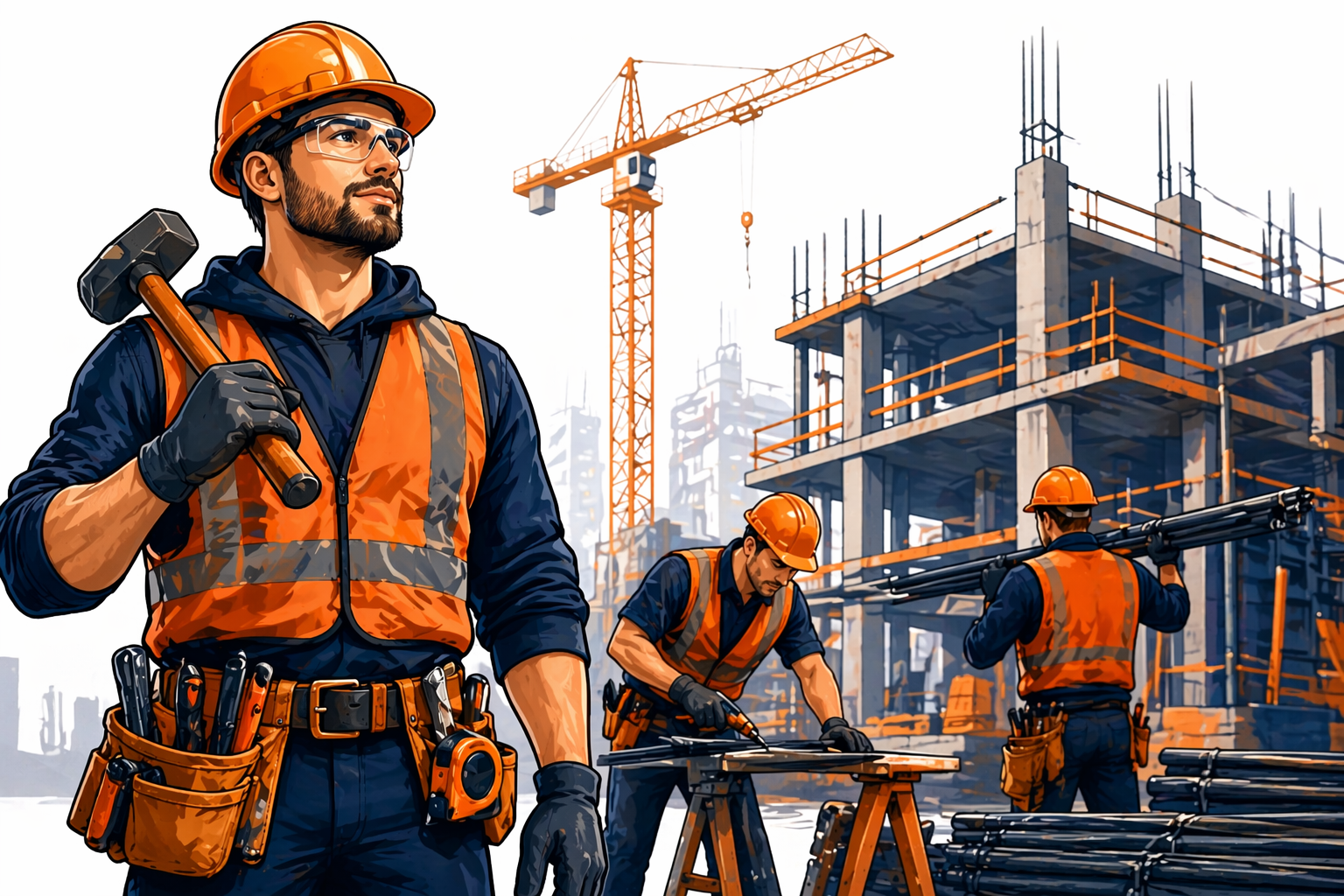
Construction is everywhere. New homes. Office buildings. Highways. Bridges. Data centers. Solar farms. If something is being built in America, construction workers are building it.
And right now, construction pays better than it has in decades. A massive labor shortage combined with record infrastructure spending means companies are paying top dollar for skilled workers.
This guide covers real construction worker salaries in 2026 - from general laborers to specialized tradespeople to project managers.
Construction Worker Salary Overview
"Construction worker" is a broad term that covers everything from entry-level laborers to highly specialized tradespeople. The pay range is wide because the skill range is wide.
General construction worker / laborer:
- Entry-level: $30,000 to $38,000 per year
- Experienced: $38,000 to $48,000 per year
- National median: approximately $42,790 per year ($20.57/hour) according to BLS
Skilled construction trades:
- Electrician: $61,590 median
- Plumber: $61,550 median
- HVAC Technician: $59,810 median
- Ironworker: $70,000 median
- Crane operator: $65,000 to $90,000+
- Heavy equipment operator: $55,000 to $80,000
Construction management:
- Superintendent: $75,000 to $110,000
- Project manager: $80,000 to $120,000
- Construction manager: $85,000 to $130,000+
The key takeaway: General laborers earn modest pay. Skilled tradespeople earn good pay. Managers and specialists earn great pay. Your earning potential in construction depends entirely on what skills you develop.
The Difference Between a Laborer and a Skilled Tradesperson
This distinction matters because it determines your pay ceiling.
Construction laborer:
- Moves materials, digs trenches, cleans job sites, assists skilled workers
- Minimal training required - can start with no experience
- Pay ceiling: $40,000 to $50,000 in most areas
- Important work but limited advancement without additional training
Skilled tradesperson:
- Licensed or certified in a specific trade (electrical, plumbing, carpentry, etc.)
- Requires 2-5 years of training through apprenticeship or trade school
- Pay ceiling: $75,000 to $120,000+
- Clear career path with multiple advancement options
If you're starting as a laborer, don't stay one. Use it as an entry point. Learn from the skilled workers around you. Decide which trade interests you. Then pursue training or an apprenticeship to level up your skills and your pay.
Salary by Construction Trade
Not all construction jobs pay the same. Here's how the major construction trades compare:
Highest Paying Construction Jobs ($75,000+)
Elevator Installer/Repairer
- Median: $106,580 (highest-paid construction trade)
- 4-year apprenticeship through IUEC
- Highly specialized, extremely competitive to enter
Construction Manager
- Median: $85,000 to $130,000+
- Most started as tradespeople and worked their way up
- Combines technical knowledge with business management
Electrical Lineman
- Median: $82,000
- Top earners: $120,000+ with overtime and storm work
- One of the most dangerous and highest-paid construction careers
- Read our electrician salary guide for more
Boilermaker
- Median: $85,000
- Travel work common - pays premium rates
- 4-year apprenticeship
Strong Paying Construction Jobs ($55,000-$75,000)
Industrial Electrician
- Median: $78,000
- High-voltage systems in factories and power plants
- Read our electrician apprenticeship guide to get started
Steamfitter/Pipefitter
- Median: $73,000
- High-pressure piping systems in industrial settings
- 4-5 year apprenticeship through UA
Structural Ironworker
- Median: $70,000
- Steel frameworks for buildings and bridges
- Physically demanding, done at extreme heights
- Median: $61,550
- Master plumbers: $75,000 to $100,000+
- One of the strongest paths to business ownership
- Median: $61,590
- Master electricians: $80,000 to $120,000+
- Demand growing with EVs, solar, and smart buildings
Millwright
- Median: $68,000
- Install and maintain heavy industrial machinery
- One of the most versatile construction trades
- Median: $59,810
- Experienced commercial techs: $75,000 to $95,000+
- Year-round demand in every climate
Sheet Metal Worker
- Median: $62,000
- Fabrication and installation of metal products
- Strong overlap with HVAC ductwork
Moderate Paying Construction Jobs ($40,000-$55,000)
Heavy Equipment Operator
- Median: $55,000 to $65,000
- Crane operators earn more: $70,000 to $90,000+
- Shorter training path than most trades
Carpenter
- Median: $56,000
- One of the most versatile construction trades
- Custom/finish carpentry pays premium rates
- Median: $55,000
- Specialized welders: $70,000 to $100,000+
- Fastest entry of any construction trade
Mason/Bricklayer
- Median: $53,000
- Physically demanding but skilled work
- Good business ownership potential
Painter (Commercial/Industrial)
- Median: $46,000 to $55,000
- Industrial painters earn more for height and hazard work
- Lower barrier to entry
Roofer
- Median: $47,000
- Physically demanding and weather-dependent
- Good money for those willing to do hard work
Entry-Level Construction ($30,000-$42,000)
General Laborer
- Median: $42,790
- No experience required to start
- Best used as a stepping stone to skilled trade training
Concrete Finisher
- Median: $48,000
- Specialized laborer role - pays more than general labor
- Physical work but steady demand
Salary by State
Construction pay varies significantly by location. States with high cost of living, strong unions, and booming construction markets pay the most.
Highest paying states for construction:
- New York: $65,000 to $85,000 average (higher for skilled trades)
- Massachusetts: $62,000 to $82,000
- Illinois: $60,000 to $80,000 (strong union presence)
- California: $58,000 to $78,000
- Washington: $57,000 to $76,000
- New Jersey: $58,000 to $78,000
- Hawaii: $56,000 to $74,000
- Alaska: $58,000 to $78,000
States with solid but lower pay:
- Texas: $42,000 to $58,000 (but massive construction volume = lots of overtime)
- Florida: $40,000 to $55,000
- Georgia: $40,000 to $54,000
- North Carolina: $40,000 to $54,000
- Ohio: $42,000 to $56,000
- Tennessee: $38,000 to $52,000
Texas and Florida deserve special mention. The base pay is lower but the construction volume is enormous. More projects = more overtime = more total income. Many construction workers in Texas and Florida earn as much as workers in higher-paying states because they work more hours.
Union vs Non-Union Construction Pay
The union vs non-union gap is significant in construction.
Union construction workers:
- Average pay: 20-30% higher than non-union for the same work
- Pension and retirement benefits
- Health insurance included
- Structured apprenticeship programs
- Overtime protections
- Total compensation (pay + benefits): Often $15,000 to $30,000 more per year than non-union
Non-union construction workers:
- Lower base pay but more flexibility
- Benefits vary widely by employer
- Can negotiate pay individually
- Easier to switch jobs and employers
- More common in right-to-work states
Major construction unions:
- IBEW - Electrical
- UA - Plumbing, pipefitting, HVAC
- IUEC - Elevator installation
- SMART - Sheet metal
- Ironworkers - Structural steel
- Carpenters - Carpentry and millwork
- Laborers - LiUNA
- Operating Engineers - IUOE (heavy equipment)
If you're in a metro area with strong union presence, joining the union is usually the best financial decision. The pay, benefits, and training quality are hard to match.
Overtime: Where Construction Workers Cash In
Construction runs on overtime. Deadlines, weather delays, and project schedules create constant opportunities for extra hours.
At $25/hour base, overtime pays $37.50/hour. Working 50 hours per week instead of 40 adds $19,500 per year to your income.
Common overtime situations:
- Deadline-driven commercial projects
- Emergency work after storms or natural disasters
- Infrastructure projects with government deadlines
- Seasonal pushes before winter shutdown
- Night and weekend work on occupied buildings
Many construction workers earn $10,000 to $30,000 in overtime per year. Some project-based workers earning $20/hour base bring home $65,000+ because they consistently work 55-60 hour weeks.
This is important when comparing construction to other careers. The base salary might look moderate, but the overtime pushes total income much higher. Ask any construction worker what they actually take home and it's usually well above the published median.
How to Get Into Construction
Path 1: Start as a Laborer (Fastest Entry)
Day one. Show up to a construction company, pass a drug test, and you can start working. No training required. This is the fastest way into the industry.
Use this as a starting point, not a career plan. While working as a laborer, figure out which trade interests you. Watch the electricians, plumbers, carpenters, and equipment operators. Then pursue training in the trade you like most.
Path 2: Trade School or Community College
6 months to 2 years. Get training in a specific construction trade before entering the workforce. You'll start at a higher position and higher pay than someone walking in off the street.
For help choosing a program, read our vocational training institute guide.
Path 3: Apprenticeship (Best Long-Term Value)
3 to 5 years. Earn money from day one while getting the best training in the industry. Graduate as a licensed journeyman with zero debt. The union and non-union apprenticeship paths are detailed in our electrician apprenticeship guide (the process is similar for most construction trades).
Path 4: Military
All military branches train people in construction trades - electrical, plumbing, carpentry, heavy equipment, engineering. Military construction experience transfers directly to civilian careers.
Path 5: Get a CDL
Many construction jobs require driving heavy vehicles. Having a CDL opens doors to equipment operation, material delivery, and specialized construction roles. See our CDL training cost guide.
Career Advancement in Construction
Construction offers one of the clearest career ladders in any industry:
Level 1: Laborer / Helper
- Pay: $30,000 to $42,000
- No experience needed
- Learning the basics
Level 2: Apprentice (Skilled Trade)
- Pay: $34,000 to $50,000
- Formal training in a specific trade
- Pay increases every year
Level 3: Journeyman
- Pay: $55,000 to $80,000
- Licensed and working independently
- Full earning potential in your trade
Level 4: Foreman
- Pay: $65,000 to $90,000
- Leading a crew on job sites
- First step into management
Level 5: Superintendent
- Pay: $80,000 to $115,000
- Managing entire job sites
- Coordinating multiple crews and trades
Level 6: Project Manager
- Pay: $85,000 to $130,000
- Managing budgets, schedules, and client relationships
- Office-based with site visits
Level 7: Construction Manager / Director
- Pay: $100,000 to $160,000+
- Overseeing multiple projects or entire divisions
- Senior leadership role
Level 8: Business Owner / General Contractor
- Pay: $100,000 to $300,000+
- Running your own construction company
- Highest risk and highest reward
The entire ladder can be climbed without a college degree. Most construction managers and company owners started as laborers or apprentices. Your experience, certifications, and leadership ability matter more than any diploma.
Why Construction Is Booming in 2026
Several factors are driving construction demand to historic levels:
Federal infrastructure spending. Billions in funding for roads, bridges, rail, airports, broadband, and clean energy. These projects create jobs for years.
Data center construction. The AI and cloud computing boom is driving massive data center construction across the country. Each one requires thousands of construction workers across every trade.
Housing demand. America is short millions of housing units. New home construction and apartment building are running at high levels.
Clean energy. Solar farms, wind turbine installations, EV charging infrastructure, and battery storage facilities all require construction workers.
Commercial construction. Hospitals, schools, retail, and office buildings continue to be built and renovated.
Aging infrastructure. Bridges, water systems, power grids, and sewer systems built decades ago need replacement. This work will continue for 20+ years.
The labor shortage makes all of this worse - in a good way for workers. Companies can't find enough people, so they're raising wages, offering better benefits, and accepting workers with less experience than they would normally require. If you've ever thought about construction, now is the best time to get in.
Tips to Earn More in Construction
1. Get specialized. General laborers earn the least. Skilled tradespeople earn the most. Pick a trade and get licensed.
2. Join the union. Union construction workers earn 20-30% more with better benefits. The apprenticeship training is the best in the industry.
3. Get your OSHA certifications. OSHA 10 and OSHA 30 are expected on most commercial and industrial job sites. Having them makes you more hirable.
4. Get a CDL. A commercial driver's license opens doors to equipment operation and higher-paying construction roles.
5. Say yes to overtime. Overtime is where construction workers make real money. The workers willing to work 50-60 hour weeks earn significantly more than the 40-hour crowd.
6. Learn to operate equipment. Heavy equipment operators earn more than most laborers. If your company offers equipment training, take it.
7. Move into supervision. Foremen and superintendents earn $20,000 to $40,000 more than journeymen. Leadership skills are worth developing.
8. Be reliable. Showing up every day, on time, ready to work puts you ahead of a huge percentage of construction workers. Reliability gets you promoted faster than almost any other quality.
9. Travel for work. Construction workers willing to travel to where the work is - pipeline projects, storm restoration, remote industrial sites - earn premium pay. Per diem ($50 to $150/day tax-free) plus travel pay add up fast.
10. Start your own company. General contractors and specialized subcontractors have the highest earning potential. Build your reputation as a tradesperson first, then transition into business ownership.
Construction vs Other Careers
Construction vs office work:
- Construction pays better at entry level ($32,000 to $42,000 vs $30,000 to $38,000 for many office jobs)
- Construction has faster income growth through overtime and advancement
- Construction is physical; office work is sedentary
- Construction has stronger job security - can't outsource a job site
- Construction workers report higher job satisfaction on average
Construction vs automotive technician:
- Similar entry-level pay
- Both are physical careers
- Automotive is more diagnostic/technical
- Construction offers more variety of work environments
- Both have strong paths to business ownership
Construction vs college degree:
- Construction starts earning immediately; college starts earning at 22
- Construction has minimal or zero student debt
- Many skilled tradespeople out-earn college graduates
- College offers some careers not available through trades
- The financial head start of starting at 18 is enormous
For more comparisons, see our highest paying trade jobs guide and best trades for 18 year olds guide.
Frequently Asked Questions
How much do construction workers make per hour? General laborers earn $17 to $23 per hour. Skilled tradespeople earn $25 to $45+ per hour. Foremen and superintendents earn $32 to $55+ per hour. Location and union status significantly affect rates.
Is construction a good career? Yes - especially if you develop a specific trade skill. General labor is hard work for modest pay. But skilled construction trades offer $60,000 to $120,000+ with excellent job security and business ownership potential.
Is construction work hard on your body? Yes. Physical demands are real - lifting, climbing, kneeling, working in weather extremes. But safety has improved dramatically, and smart career progression (moving into supervision or management) reduces physical demands as you age.
Can you make six figures in construction? Yes. Master electricians, master plumbers, linemen, construction managers, and business owners regularly earn $100,000+. Even journeymen can hit six figures with overtime and the right specialty.
What construction trade pays the most? Elevator installers ($106,580 median), electrical linemen ($82,000+), boilermakers ($85,000), and industrial electricians ($78,000) are among the highest paid. Construction managers earn $85,000 to $130,000+.
Do I need experience to start in construction? No. General laborer positions require no experience. You can walk onto a job site and start working. From there, pursue training in a skilled trade to increase your pay.
What age can you start in construction? Most laborer positions require you to be 18. Some trades allow apprentice applications at 17 with parental consent. See our best trades for 18 year olds guide for options.
Is construction recession-proof? Not entirely - new construction slows during recessions. But repair, maintenance, and infrastructure work continue regardless of the economy. Skilled tradespeople with diverse abilities weather downturns better than general laborers.
What to Do Right Now
- If you want to start immediately, apply to construction companies as a laborer. No experience needed. Start earning while you decide which trade to pursue.
- If you want to earn more, pick a skilled trade and pursue training. Search apprenticeship.gov for programs or find trade schools in our vocational training institute guide.
- Get OSHA 10 certified online. Takes about 10 hours, costs $25-$35. Required on most commercial job sites.
- Consider a CDL to open doors to equipment operation and higher-paying construction roles.
- Compare construction trades in our highest paying trade jobs guide, electrician salary guide, plumber salary guide, and HVAC salary guide.
- If you're 18 and choosing a career, construction offers the fastest entry of any career path. You can start earning tomorrow. But invest in a skilled trade for long-term success.
Something is always being built. Roads, homes, data centers, solar farms, hospitals - the list never ends. Construction workers build the world we live in. The pay is strong. The demand is massive. And if you develop real skills, this career can take you anywhere.
Interested in Automotive?
APEX Tech Nation is the go-to platform for automotive technicians. Free AI diagnostics, training, ASE prep, and a community of working techs. Built by Anthony Calhoun.
Visit APEX Tech Nation